


Cancer Model
Mouse model of cancer can be used to:
Study the intrinsic mechanisms involved in tumorigenesis, tumor progression and metastasis
Evaluate the efficacy of cancer immunotherapies
Serve for preclinical screening of anti-cancer agents
Shanghai Model Organisms Center offers a variety of mouse models of cancer to meet the needs of both academic and industry partners.
Genetically-engineered mouse model (GEMM)
Genetically engineered mouse models with spontaneously arising tumors. GEMM have been developed in SMOC to mimic the genetic events observed in human cancer genesis and development, with transgenic, knock-in, or knock-out models based upon well-characterized oncogenes or tumor suppressors.
The main features of GEMM include fully competent murine immunity and comprehensive mouse stroma that is known to directly affect tumor response to therapy. Besides, there is usually a clear molecular pathogenesis of disease around specific mutated genetic features, which makes GEMM an ideal tool for investigating the underlying mechanisms of tumorigenesis.
In general, GEMM cancer models are established using the following two strategies:
Oncogene overexpression or introduction of disease-causing mutations
A few examples include Myc conditional overexpression, Apcmin, Kras(G12D), etc.
Loss of tumor suppressor gene function
Examples include P53 KO, P53 CKO, Pten KO, Pten CKO, Smad4 CKO, Rb1 CKO, Brca1 CKO, etc.
Cancer cell line-derived xenograft (CDX) model
Cancer cell line-derived xenograft (CDX) model is a well-established mouse model type commonly used for cancer research and anti-tumor drug development, due to its user-friendly techniques and outstanding repeatability. In CDX models, cancer cells are inoculated into immuno-deficient mice via various routes. Available recipient mice include Balb/c nude mice, NOD-scid or other immunodeficient mice.

Figure: A549-mediated subcutaneous tumor formation on NMG mice.
View more immunodeficient mouse strains.
Click here to learn more about our Cancer Cell line-derived Xenograft (CDX) Model services.
Liver cancer patient-derived xenograft (PDX) model
Patient-derived Xenografts (PDX) are advanced preclinical oncology model for drug development. It offers a far better alternative for preclinical drug evaluation as compared to the conventional cell line-derived xenograft model.
By maintaining genotypic and phenotypic diversity of patient tumor tissues, PDX is capable of capturing a more faithful representation of the human tumor's characteristics.
PDX preserves tumor stroma and tumor microenvironments.
Compared with cancer cell lines, PDX offers a more faithful representation of the mechanisms of tumor genesis and development.
Compared with cancer cell lines, PDX offers a better reflection of cancer patients' drug sensitivity and tolerance levels during drug screening.
Applications include:
Screening and biomarker development of anti-cancer drugs
Co-clinical trials of anti-cancer drugs
Precision medicine
Study on tumor mechanisms
Having successfully established more than 60 types of liver cancer PDX models, Shanghai Model Organisms has identified their key characteristics through the analysis of genomics, histopathology, growth characteristics, drug responses to standard treatments, etc. Our research has demonstrated that PDX is capable of replicating the heterogeneity of patient tumors in various aspects, including their molecular, genetic and histological complexities. Our range of PDX models allows highly-efficient testing and analysis of drug efficacy in different clinical settings. PDX tumors collected from our PDX models can also be used in preclinical trials to facilitate drug development by mimicking Phase II patient tumor sizes.
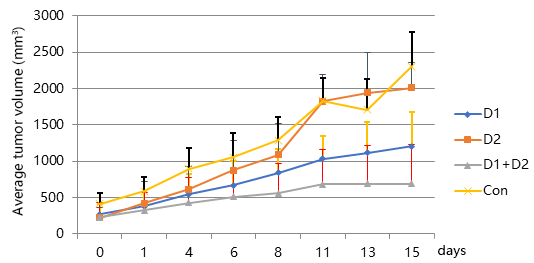
Fig 1. Tumor growth curves of liver cancer PDX models after treatment with different drug groups.
Carcinogen-induced mouse model
Diethylnitrosamine (DEN) is highly toxic to humans and animals. The injection or oral administration of the smallest quantities of DEN can result in severe liver damage. Due to its consistency in inducing hepatic lesions in rodents, DEN is commonly used to generate rodent models of hepatocellular carcinoma (HCC). Mice develop liver damage after DEN administration, which leads to cirrhosis and tumors. Hence the DEN mouse model is one of the ideal models for the research on the pathogenesis of hepatic cancer.
View details on DEN-induced mouse models of HCC provided by Shanghai Model Organisms.
热门文章
Cre-ERT2在无Tamoxifen诱导的情况下,在细胞质内处于无活性状态;当Tamoxifen诱导后,Tamoxifen的代谢产物4-OHT(雌激素类似物)与ERT结合,可使Cre-ERT2进核发挥Cre重组酶活性。
查看你一定听说过Cre-lox重组系统,无论你是否直接进行过基因操作。由于Cre-lox系统具有操作简单、重组率高的优点,如今已经成为体内外遗传操作的强有力工具。利用Cre-lox系统,可以在特定细胞、组织或整个生物体,甚至在特定时间点敲除或表达某个基因,实现对特定基因的时空特异性操作,这对基因功能的研究和人类疾病动物模型的建立都具有深刻影响。
查看


